

First aid for dogs can be life-saving in an emergency. It is essential that dog owners have basic knowledge of first aid in order to act quickly and effectively in the event of an accident—before professional veterinary help arrives.
Injuries and Wounds
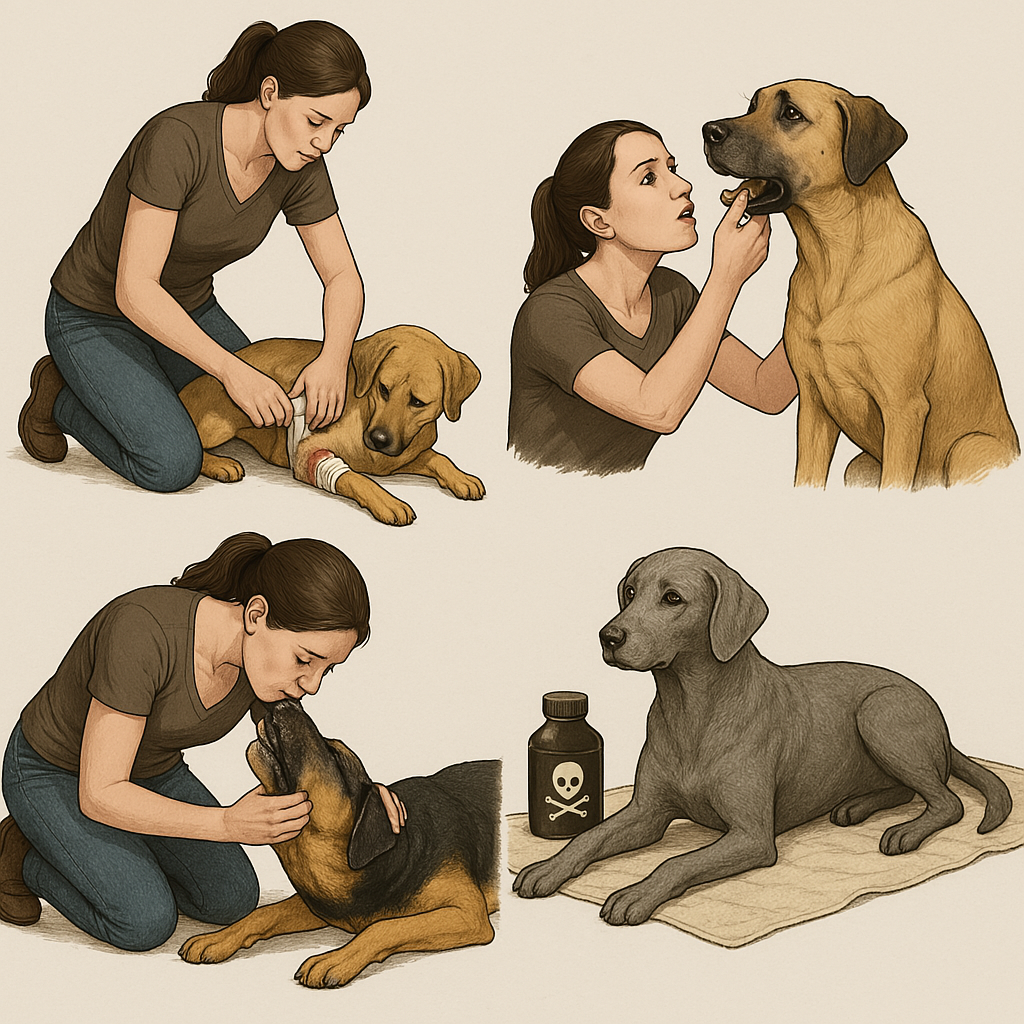
A common emergency in dogs is external injuries or bleeding wounds. If your dog is bleeding, you should first try to stop the bleeding. Apply a clean pressure bandage—if necessary, using a cloth or gauze from a first aid kit. Apply gentle but firm pressure to the wound. Try to remain calm and reassure your dog to prevent panic. Then seek veterinary care immediately.
Swallowed Foreign Objects
If your dog has swallowed an object that may be dangerous (for example toy parts, bones, or toxic substances), act carefully: If the object is still visible in the throat, you may try to remove it carefully with two fingers or tweezers. However, be careful not to injure your dog further or push the object deeper. If your dog shows difficulty breathing, gagging, or excessive drooling, seek veterinary help immediately—especially if the object is not visible or is stuck.
Cardiac Arrest and Resuscitation
If your dog stops breathing or loses consciousness, every second counts. First check whether the airways are clear. Gently tilt the head back, carefully pull out the tongue, and remove any foreign objects. If you cannot feel or hear breathing, begin resuscitation immediately:
- Chest compressions: Lay the dog on its right side. Place your hands in the center of the chest, roughly at elbow level. Compress about one-third of the chest width with fast, regular compressions (100–120 per minute).
- Mouth-to-snout resuscitation: Close the dog’s mouth, extend the neck, and gently blow air into the nose until the chest rises slightly. Alternate in a rhythm of 30:2 (30 compressions, 2 breaths).
Continue these measures until the dog starts breathing again or a veterinarian takes over.
Poisoning
Poisoning caused by plants, household chemicals, medications, or certain foods (for example chocolate or grapes) can quickly become life-threatening. Call a veterinarian or a poison control center immediately. Never try to induce vomiting on your own without veterinary instructions. If possible, note the type, amount, and time of ingestion, and bring the packaging of the toxin to the veterinary clinic.
Epileptic Seizures
An epileptic seizure can look frightening but usually ends after a few minutes. Stay calm, protect your dog from injury (for example from furniture edges), and turn off the lights if possible. Keep a safe distance and do not put your hands in the dog’s mouth. After the seizure, your dog will need rest. Still, seek veterinary care promptly—especially if it is the first seizure or if it lasts longer than 5 minutes.
Your Emergency Kit
Every dog owner should keep a small first aid kit available—at home, in the car, and while traveling. It should include:
- sterile dressings
- gauze bandages and adhesive bandages
- scissors and tweezers
- disposable gloves
- disinfectant (suitable for animals)
- muzzle loop or muzzle (for your own safety in case of pain reactions)
- tick remover
- blanket to keep the dog warm
- drinking water
- phone numbers of veterinarians, animal clinics, and poison control centers
Further Training and Preparation
A first aid course for dogs can make a crucial difference in an emergency. Many veterinarians and animal welfare organizations offer practical seminars where you can practice life-saving measures under professional guidance.
Conclusion:
As a dog owner, you carry responsibility—even in emergencies. Basic first aid knowledge can save lives, relieve pain, and positively influence recovery. The better prepared you are, the more calmly and confidently you can act—and provide your four-legged friend with the best possible help when it truly matters.