
Golden Retrievers are known to be friendly, gentle, and people-oriented – but when they are lost, traumatized, or abandoned, their behavior can change completely. A stray Golden Retriever may appear panicked, shy, or even aggressive – not because he is “bad,” but because he is afraid. This is exactly where your role begins – with respect, patience, and knowledge.
1. 🔍 Assess the Situation – Observe Before You Act
Before you try to approach the dog:
- Keep a safe distance (at least 10 meters).
- Observe the dog’s behavior: Is he curious? Frightened? Does he allow people to come close? Does he appear injured or sick?
- Take photos or videos and note:
- Location and time
- Possible feeding spots or hiding places
- Behavior toward people or other animals
This information will later be valuable for helpers and animal welfare organizations.
2. 🧤 Wear Protective Equipment
Even a Golden Retriever may bite out of fear or run away in panic. Therefore, protect yourself:
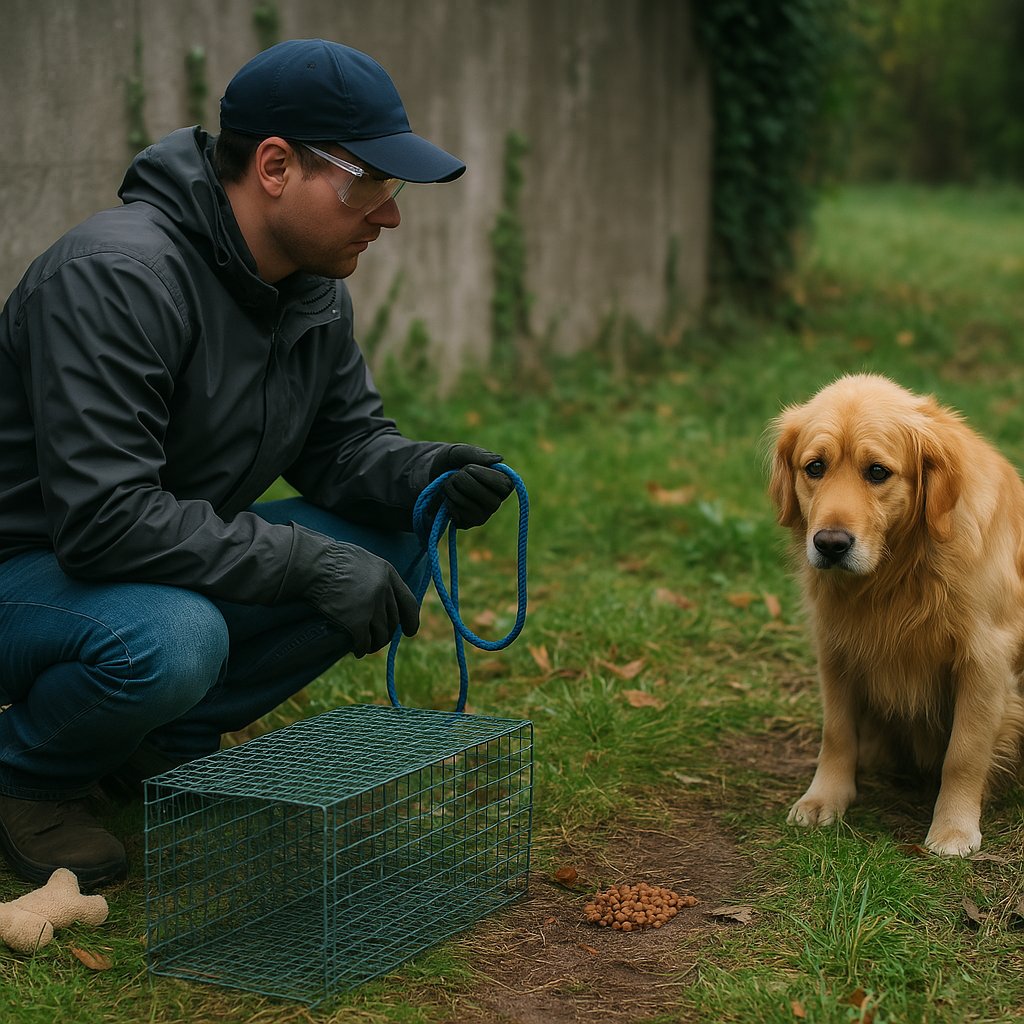
- Sturdy, long clothing (for example jeans, weatherproof jacket)
- Leather or work gloves
- Protective goggles when working very close to the dog or feeding by hand
- Non-slip shoes
If you have a transport crate or capture device, clean it thoroughly beforehand and prepare it with a blanket or towel.
3. 🦴 Prepare Attractive Food
A hungry or curious dog can usually be lured more easily. Especially with retrievers, the following often works well:
- Liver sausage or cheese (cut into small pieces, strong smell)
- Canned dog food, slightly warmed if possible
- Cooked chicken without bones
- Squeaky dog toy (use carefully!)
💡 Important: Never throw food directly at the dog. Place it in a gentle arc at a safe distance.
4. 🪤 Set Up a Trap or Crate
If the dog is too shy or cannot be leashed, a humane live trap (for example a box trap) is often the safest method. Please consider:
- Placement in an area the dog regularly visits (for example grassy strips, parking areas, forest edges)
- Camouflage using branches or blankets
- Bait food inside the trap, with only small amounts outside
- Provide water
Never leave the trap unattended for long periods – check regularly (every 30–60 minutes) and work with an experienced animal welfare organization whenever possible.
5. 🧘 Calm the Dog and Build Trust
When approaching the dog – whether directly or with food:
- Speak calmly and gently, avoid high-pitched tones.
- Move slowly, never directly or in a rushed manner.
- Give the dog space to retreat, never corner him.
- Sit down if possible – this makes you appear less threatening.
⛔ Avoid:
- Prolonged direct eye contact
- Calling, shouting, or whistling
- Sudden movements or too many people getting too close
6. 🪢 Safe Capture with Leash and Patience
If the dog approaches you:
- Use a large slip lead or retriever leash (tightens without choking)
- Avoid sudden grabbing
- Attach the leash only when the dog is calmly eating or sniffing
If the dog allows you to leash him, do not start walking immediately – stay calm beside him for a few minutes. If he becomes panicked, stand still, wait, and breathe calmly.
7. 🚑 In an Emergency – Seek Professional Help Immediately
If the dog:
- defends itself aggressively
- appears injured or is bleeding
- runs into traffic or escapes
- can no longer be found, even though you know where he was
… then get help immediately!
📞 Contact immediately:
- A local animal welfare organization
- The animal emergency service in your region
- The local public order or veterinary authority
- An experienced veterinarian (if you have secured the dog)
Important: Provide location, time, behavior, appearance, photo, and any special details.
8. 🐕 After Capture – First Steps
If you have safely secured the dog:
- Secure the dog twice: leash and, if necessary, harness or transport crate
- Drive directly to the nearest veterinary clinic to:
- Check for a microchip
- Examine injuries
- Assess the overall condition
The dog will usually be reported to the local animal shelter or temporarily placed in foster care.
💡 Golden Retrievers usually have owners who are searching for them – have the dog scanned with TASSO or FINDEFIX.
🧡 Conclusion: Rescue with Care and Responsibility
Rescuing a frightened Golden Retriever from the street is not a spontaneous act of kindness, but a responsible and often time-consuming task. Anyone who takes on this challenge must be willing to observe, learn, accept help – and remain patient.
But it is worth it. Because for the dog, your help can mean the difference between fear and safety, between being lost and finding a home.